
If you’ve ever Googled how to change your life as a young woman, I don’t think you were searching for a perfectly curated morning routine or another productivity hack. More often than not, that search comes from a place of feeling stuck. Maybe a little behind. Maybe overwhelmed. Maybe watching everyone else move forward while you’re still trying to figure out what direction you’re even meant to be going in.
This week on To All The Girls Out There, I sat down with Laiba Waseem, and what unfolded was a deep and honest conversation We spoke about growth and healing, but also about how messy and uncomfortable that process can be.
When people talk about how to change your life, it’s usually framed as this huge transformation. A complete reinvention. But what we kept coming back to in this episode was something much quieter: changing your life doesn’t start with fixing yourself. It starts with accepting yourself.
That’s what I found most inspiring about Laiba. She didn’t let her past define the direction of her future, and she didn’t use it as a reason her life had to go one way. Instead, she took ownership of her story. She changed her mindset. She chose differently. And there’s something powerful about watching someone decide that their experiences will shape them, but not limit them.
It made me reflect on how we, as young women, often think changing our lives means becoming someone completely new. But maybe it’s less about becoming someone else and more about becoming honest with who you already are.
And that’s where this conversation really begins.
Changing Your Life Doesn’t Mean Becoming a Different Person
One of the biggest things we kept coming back to in this conversation was this idea that when we start a healing journey, we automatically assume something in us is broken.
Like there’s a version of ourselves we need to fix before we’re allowed to move forward.
I even said it during the episode — sometimes when you’re doing inner work, it can feel like everything needs sorting out before anything good can happen. Before I get into this university, I need to fix this. Before I meet the right partner, I need to work on that. Before I can fully step into my purpose, I need to be completely healed.
And when you really think about it, that mindset quietly suggests that who you are right now isn’t enough.
So many of us grew up in survival mode. We learned to people please. We learned to shrink ourselves. We adapted to our environments in ways that helped us cope at the time. And now, as adults, we’re trying to unlearn those patterns while judging ourselves for ever having them in the first place.
Acceptance Over Perfection
But Laiba said something that genuinely shifted how I look at healing.
She’s been on this journey since she was 13. She’s an advocate for child sexual abuse and mental health, but she’s also a survivor. She lives with complex PTSD — something that doesn’t just disappear. And she was so clear about the fact that she didn’t “fix” those parts of herself. She didn’t erase her memories. She didn’t get rid of being a survivor.
She accepted it.
She got to a place where she could say: this is part of my story. This is part of who I am. And that’s okay.
That doesn’t mean she didn’t do the work. She did therapy. She checked in with herself. She made sure she was stable enough before stepping into advocacy. But she didn’t treat herself like a broken project that needed repairing before she was allowed to do meaningful things.
And I think that’s such an important distinction when we talk about how to change your life.
Becoming More Yourself, Not Someone New
Because maybe changing your life isn’t about becoming a completely different person. Maybe it’s about becoming more honest about who you already are. Maybe it’s about saying, “These experiences shaped me, but they don’t disqualify me.”
There are parts of us that might always be sensitive. Parts that might always need extra care. That doesn’t mean we’re unfinished. It just means we’re human.
The way Laiba described healing wasn’t about perfection. It was about contentment. Being able to sit with herself and say, “This is me. I’m not here to create a new image for other people. I’m just here to be myself, unapologetically.”
And that made me reflect on how often we delay our own lives because we think we need to be fully healed first.
Maybe the real shift — the real beginning of changing your life — is accepting that you are enough right now, even as you grow.
Growth doesn’t mean you were broken.
It just means you’re expanding.
Stop People Pleasing If You Want to Change Your Life

Another part of the conversation that really stood out to me was when we started talking about people pleasing — because it’s one of those things so many of us do without even realising we’re doing it.
What People Pleasing Really Looks Like
When people hear the term people pleaser, it already comes with so many negative connotations. It almost sounds weak, or like you’re living your life purely for validation. And because of that, a lot of people don’t even want to identify with it. They’ll say, “That’s not me,” even when, deep down, it is.
Laiba was really honest about this. She spoke about how her sister had been telling her for a while that she was a people pleaser, and she just didn’t agree with it at first. It wasn’t until she actually sat with it and reflected that she realised she was often over-extending herself for people whose opinions didn’t even truly matter to her. Not because she wanted praise — but because she felt it was her responsibility to keep people happy.
And that really made me think, because people pleasing doesn’t always look dramatic. Sometimes it’s small things. Saying yes when you want to say no. Doing something just because someone is older than you, or because you respect them, even though it doesn’t sit right with you. Putting other people’s comfort before your own peace.
When Saying No Feels Impossible
We also spoke about how much harder this can feel in family settings, especially in ethnic households, where boundaries can easily be mistaken for disrespect. And the thing is, setting boundaries isn’t about becoming cold or turning into a villain. It’s not about saying, “I don’t care about anyone else.” Most of the time, it’s about protecting your sanity when you’re emotionally exhausted and constantly over-extending yourself. Saying no doesn’t mean you don’t care — it means you’re aware of your limits.
Something else I found interesting is how often we assume people pleasers are weak, when in reality, most people are doing it for deeply personal reasons. Sometimes it’s about wanting people to stay. Sometimes it’s about respect. Sometimes it’s about not wanting to feel like an outcast. And a lot of the time, people don’t even realise they’re doing it until someone holds up a mirror.
Laiba spoke about how this shows up for her in small ways — agreeing to things she doesn’t have time for, struggling to say no, feeling emotionally available when she’s actually drained.
Understanding the Roots of People Pleasing
She also touched on where it came from for her — that fear of people leaving, of needs not being met as a child, and subconsciously believing that in order for people to stay, you have to do what they want. Hearing her say that out loud was powerful, because I know so many girls listening could relate to that exact feeling.
And I appreciated how honest she was about the fact that this is still something she’s working on. That even with all the healing she’s done, this is a pattern she’s actively unlearning. Not because she’s failed — but because she’s human.
Internal Change Over External Action
It made me reflect on how often we talk about how to change your life without acknowledging that sometimes the biggest changes are internal. Learning to say no. Learning to speak up when something doesn’t sit right with you. Learning that you don’t need to exhaust yourself to be worthy of love, respect, or belonging.
Because the truth is, you can’t build a life that feels aligned if you’re constantly bending yourself to fit other people’s expectations. And at the same time, growth will sometimes feel like loss. You might outgrow certain dynamics. You might disappoint people. You might feel uncomfortable for a while.
That doesn’t mean you’re doing something wrong.
Sometimes changing your life isn’t about doing more — it’s about doing less of what drains you, and learning that saying no can be an act of self-respect, not selfishness.
Sometimes Changing Your Life Means Leaving Home
One of the most emotional parts of the episode was when Laiba spoke about moving from London to Manchester.
On the surface, it sounds like a simple decision — moving cities for university. But when she unpacked it, you realise it was so much more than that. It wasn’t just about education. It wasn’t just about independence. It was about survival, growth, and finally choosing herself.
The Weight of Family Guilt
She spoke about the guilt first.
For years, she had been a caretaker in her family — especially to her siblings. So the idea of leaving them behind felt almost unbearable. She wasn’t just moving cities. She was stepping away from the role she had held for most of her life. And when you’re used to being the responsible one, the strong one, the one everyone leans on, choosing yourself can feel selfish — even when it’s necessary.
It actually reminded me so much of what I wrote in my Eldest Daughter Syndrome blog/episode That silent pressure to hold everything together. To be mature early. To absorb everyone else’s emotions. To feel responsible for things that were never fully yours to carry. When you’ve grown up in that role, we kinda forget how much being the eldest shape’s us and the decisions we make
But what really struck me was when she said, “I needed to do that to change my life.”
Not “I wanted to.”
Not “It would be nice.”
She needed to.
And that’s such a hard truth to sit with — that sometimes if you truly want to change your life, you can’t stay in the same environment that shaped the version of you you’re trying to outgrow.
Space Creates Perspective
Laiba said something that stayed with me: if she had stayed in London and tried to build the life she has now from there, she doesn’t think she would be this version of herself. Moving away opened her eyes to a completely different reality. It gave her perspective. It gave her space.
And space is powerful.
She spoke really openly about how living in the same house where her trauma happened made healing harder. When she moved out and finally started sleeping properly, something as simple as sleep, she realised how much your environment impacts your nervous system, your peace, your identity.
Sometimes we think healing is about mindset shifts and journalling and affirmations. But sometimes it’s about physically removing yourself from what’s hurting you.
And that doesn’t mean you don’t love your family. It doesn’t mean you’re abandoning anyone. In fact, part of her decision was rooted in wanting better for them too, wanting to show her siblings what a different life could look like.
What I found really beautiful was how full-circle it became. At first, her siblings struggled. They called her constantly. They felt like they had “lost a parent.” But eventually, they began to understand. They saw her grow. They saw her happier. And now they encourage her not to move back — because they can see that this version of her exists because she left.
That bittersweet moment of realising the hardest decision you ever made was the right one… that’s growth.
She also spoke about finding joy in Manchester, in her friendships, in her partner, but also within herself. For so long she thought she wasn’t a happy person. And then she changed her environment and realised… maybe she was never unhappy. Maybe she was just surviving.
Ownership and Growth
And I think that’s something so many girls need to hear.
If you’re constantly asking yourself how to change your life, sometimes the question isn’t “How do I fix myself?” It’s “Where am I trying to grow?”
Because environments can either nurture you or stunt you.
And the most powerful thing Laiba said in that whole section was this: taking control back felt powerful. Saying, “I’m going to do this for me — whether you accept it or not.”
That’s not selfish. That’s ownership.
And ownership is often the first real step when you decide you’re ready to change your life.
Change Starts With “Why”
Finding a Deeper Reason
Laiba was able to change because she found her why. Not a surface-level reason. Not something that sounded impressive. But something deeply personal. She didn’t want a flashy life or a title. She wanted to heal her inner child. She wanted to look back at nine-year-old Laiba and say, “I didn’t let it define me.”
And I think that’s why her change lasted.
We talk a lot about how to change your life, but if you don’t know the real reason you’re trying to change, it’s hard to sustain it. If your motivation is just to escape discomfort or prove something to someone else, it burns out quickly. But when your why is rooted in something deeper — healing, peace, purpose — it becomes easier.
Her advocacy journey is such a good example of that. She started in mental health spaces, doing small bits of work here and there. It wasn’t massive at first. It grew over time. And eventually she received the highest honour from her local council — on a date that once held some of her worst memories. She didn’t erase what happened to her. She changed what that date meant.
Healing Before Helping Others
Something powerful was when she spoke about child sexual abuse advocacy.
She shared her story publicly once on radio, and then she stopped. Not because she didn’t care. But because she realised she wasn’t ready. She knew she couldn’t do that work properly if she was still actively bleeding from it. So she went back to therapy. She focused on herself. She healed before she stepped fully into that space.
That level of self-awareness is powerful.
It made me think about how often we rush into “change” without checking in with ourselves first. She said that whenever she’s offered something new now, she has to ask herself why she’s doing it. Because her time is limited. Her energy is limited. Saying yes to one thing often means saying no to something else. So it has to align with her purpose.
Defining Change on Your Own Terms
And I think that’s the part of how to change your life that doesn’t get spoken about enough. It’s not just about adding new habits or chasing bigger goals. It’s about defining what change actually looks like for you. Is it your mindset? Your environment? Your income? Your circle? Your healing? There are so many parts of life — so which one are you actually trying to change?
For Laiba, it wasn’t about becoming someone else. It was about becoming more herself.
And maybe that’s the shift.
Not changing your life to impress people.
Not changing your life to outrun your past.
But changing your life because you finally understand why it matters to you.
The Real Change Was Self-Worth
When Laiba spoke about her old identity, she didn’t pretend she was a completely different person. She still sees glimpses of that younger version of herself — the sass, the sarcasm, the rebellious streak. But the biggest difference wasn’t her personality.
It was her self-worth.
She said that she didn’t love herself back then. She genuinely thought she was worthless. Her self-esteem was low, and that affected everything — her friendships, the people she allowed into her life, the way she navigated the world. When you don’t believe you have value, you move differently. You tolerate more. You settle more. You live in survival mode.
And that survival mode version of her couldn’t have the life she has now.
The Laiba who believes she’s priceless — not in an arrogant way, not in a loud way — but in a grounded, comfortable way, only exists because she chose to heal. She went to therapy. She did the work. She unlearned the way she used to see herself.
And that’s when I realised something while we were talking: the real way she changed her life wasn’t through career success. It wasn’t through moving cities. It was through learning her worth.
She even spoke about how that shift changed her mindset on men. There was a time she didn’t trust them, didn’t feel safe, didn’t feel secure. And now she’s in a healthy relationship. Not because someone “saved” her — but because she reached a place where she could love herself enough to love someone else properly. She said it herself: loving herself meant she could give her partner 100%, because she wasn’t pouring from emptiness anymore.
The Power of Self-Talk
We also spoke about self-talk — the small, everyday things we say without thinking. Calling yourself dumb. Saying “I’m so stupid” over a small mistake. And it sounds minor, but it’s not.
I shared a memory about one of my teachers writing on the whiteboard, “Don’t call yourself dumb. You’re amazing.” I didn’t even realise how casually I had insulted myself until someone else pointed it out. And that’s the scary part. Sometimes we criticise ourselves so automatically that we don’t even notice.
Laiba said now, if she catches herself slipping, she checks it immediately. She doesn’t let other people put her down, and she doesn’t put herself down either.
And I think that’s such a quiet but powerful form of change.
That’s exactly why I created my Standing on Business wake-up call. It’s for the days you forget who you are. The days you start shrinking again. The days you need that reminder to move like someone who knows she’s worthy.
The girl who doesn’t negotiate her standards.
The girl who doesn’t beg to be chosen.
The girl who backs herself — even in private.
Because when people search how to change your life, they’re often looking for big, visible shifts. But sometimes it’s as simple — and as difficult — as changing the way you speak to yourself.
Paying yourself compliments.
Accepting compliments without downplaying them.
Saying “thank you” instead of deflecting.
Believing you’re enough without having to shout it.
Old Laiba couldn’t even compliment herself. Now she does it freely. Not because she’s cocky. But because she knows her value.
Choosing Yourself Without Validation
When you love yourself first — not in a selfish way, but in a secure way — you stop begging for validation. You stop shrinking. You stop chasing things that don’t align. You start choosing better because you believe you deserve better.
And maybe that’s another way of how to change your life.
Not becoming someone new.
Not impressing the world.
But looking at yourself honestly and deciding you are worthy — and then moving like it.
Acceptance, Trauma & Becoming Self-Aware
One of the hardest truths Laiba shared was simple but heavy: it happened.
Her childhood happened. It wasn’t what it should have been. And there was a point where she had to sit with the reality that she’s never going to get that version of her life back. She’s never going to suddenly have the childhood she deserved.
That acceptance changed her.
Healing the Inner Child
She spoke about mourning it — realising she wouldn’t be able to tell her future children sweet, carefree stories about her early years. That grief is real. But what moved me was what came after it. She said, I can heal my inner child now. I can watch the cartoons I didn’t get to enjoy. I can let myself be playful. I can create new memories that honour the younger version of me.
And that shift — from bitterness to acceptance — felt powerful.
Because changing your life doesn’t always mean rewriting the past. Sometimes it means accepting it fully and deciding what you’re going to do with it now.
Learning From New Environments
When she moved to new environments, especially university, she was suddenly surrounded by people who had completely different childhoods. Healthy ones. Stable ones. People who could talk about their upbringing with pride and ease. At first, that was hard. It forced her to confront what she didn’t have. It made her grieve all over again.
But instead of shrinking, she observed.
She began to see the difference between healthy and unhealthy dynamics. She began to understand what normal could look like. And rather than letting comparison turn into resentment, she let it turn into awareness.
That’s where self-awareness came into the conversation.
We spoke about whether people should be careful when talking about their childhoods around others who may have experienced trauma. And what we landed on wasn’t silence — it was awareness. You can’t walk around filtering every sentence out of fear of triggering someone. You don’t always know what someone has been through. But you can move through the world with empathy. You can be mindful. You can be accountable once you do know.
And equally, you can’t control how everyone responds to your story.
That part is important too.
Laiba is open about her experiences now, but she shares them in a trauma-informed way. Not to shock people. Not to centre pain. But to bring awareness. And she’s had people tell her that hearing her story changed the way they see adversity. It made them more conscious of what others might be carrying quietly.
I think that’s such a full-circle moment.
Strength Through Acceptance
The same childhood she once grieved has become the foundation of her strength, because she chose to accept it instead of letting it harden her.
And that “acceptance” is another powerful way of how to change your life.
You stop fighting the fact that it happened.
You stop pretending it didn’t shape you.
You stop wishing it was different.
And instead, you ask: how can I honour who I was with how I live now?
Healing your inner child isn’t about becoming childish. It’s about giving yourself the softness you didn’t receive. It’s about letting yourself experience joy without guilt. It’s about knowing that your story is different — and being okay with that.
The People Around You Will Shape You
If there’s one thing that kept coming up in our conversation, it’s that you cannot change your life in isolation from the people around you.
Your circle matters. More than we like to admit.
Laiba literally said it, the people around you are one of the most important parts of your life. They shape your everyday reality. They influence how you see yourself. They either uplift you, support you and remind you who you are… or they slowly drain you without you even realising it.
And I think that’s something a lot of girls struggle with, especially in girlhood where friendships feel sacred. We hold onto people because of history. Because of loyalty. Because of who they used to be. Because of who we used to be.
But growth changes dynamics.
Laiba spoke about having to let certain people go. Not in a dramatic way. Not with hatred. Just with awareness. She said it’s not selfish — it’s self-aware. And that’s such a mature way to look at it.
Because sometimes someone isn’t a bad person. They’re just not aligned with where you’re going.
The Balloon Analogy
That’s where the balloon analogy came in during our conversation. I said imagine you’re a helium balloon rising. You have dreams, goals, healing you’re working through. And someone is holding onto the string at the bottom. They’re not attacking you. They’re not sabotaging you. But they’re weighing you down. So instead of rising freely, you’re dragging extra weight.
You don’t need someone clinging to you.
You need other balloons rising beside you.
That analogy really captures what it feels like when you’re trying to grow but your environment isn’t.
Distinguishing Imperfection From Draining People
And this doesn’t mean cutting everyone off the second they make a mistake. People aren’t perfect. We all have flaws. But there’s a difference between imperfection and consistently feeling drained, unsupported or small around someone.
The right people won’t take away the difficulty of change, but they will make it easier. They’ll be patient with you while you’re evolving. They won’t mock your healing. They won’t belittle your goals. They’ll celebrate you — even when you’re still figuring things out.
Laiba also said something important: some friends are there for a reason, and some are there for a lesson. Not everyone is meant to stay forever. And that doesn’t make the friendship a failure. It just means it served its purpose.
When you’re thinking about how to change your life, you can’t ignore your environment. You can journal every morning, go to therapy, build new habits — but if you’re constantly in rooms that shrink you, it’s going to feel ten times harder.
Your circle won’t just witness your growth.
They’ll either water it or stunt it.
You Are Not Behind — You Are Becoming

A lot of girls don’t just search how to change your life because they want to level up.
They search it because they feel behind.
I hear it all the time. “It’s too late for me.”
“I should’ve done this already.”
“I’m in uni now.”
“I’ve already graduated.”
“I’m 23.”
“I’m 25.”
And every time I hear it, I think — according to who?
Change Has No Expiry Date
During the episode, I asked Laiba what she would say to the girls who genuinely believe it’s too late for them to change. Her answer was simple: change doesn’t have an expiry date.
You can decide today to think differently. You can decide tomorrow to move differently. It doesn’t have to be dramatic. It doesn’t have to be public. It doesn’t need approval. If you deem it as change, that’s enough.
And that was so important.
Because so much of the pressure we feel comes from timelines we didn’t even create. Social media timelines. Education timelines. Cultural timelines. That invisible list of “by this age you should have…” that no one can actually trace back to a real source.
Even with my own gap years, people love to say, “You’re going to be behind.” Behind who? Behind what? I genuinely ask that question. Because at the end of the day, I’m going to be 23 anyway. So why not be 23 having taken the path that felt right for me?
Laiba said something that reframed it beautifully. She wants to do a doctorate one day. And she said, “I’ll be 40 and a doctor. I’m going to be 40 anyway.”
And that’s it.
You’re going to arrive at that age regardless (provided that Allah wills). The only question is: did you allow yourself to grow into who you wanted to be along the way?
When you really think about how to change your life, it’s rarely about one big leap. It’s about small decisions. Deciding not to let your past live in your head rent free. Deciding to charge it rent. Deciding to try again. Deciding to release control over strict timelines and focus on direction instead.
Your Past Doesn’t Define You
Laiba’s story is proof that it’s never “too late.” She experienced trauma. Abuse. A childhood that could have easily defined her future in a completely different way. If anyone had an “excuse” to stay stuck, it would have made sense.
But she didn’t.
And I’m not saying everyone processes pain the same way. I’m not saying it’s easy. But I am saying this: your past does not automatically disqualify you from building something better.
Take Control of Your Story
You are given the pen to narrate parts of your story. Not all of it — life happens, things are out of our control — but there is a portion that is yours. So why not take control of what you can?
Sometimes the people who change their lives the most are the ones who felt like they had nothing to lose. And maybe that’s the shift. Instead of seeing your current situation as proof you’re behind, what if you saw it as your starting point?
If you’re still breathing, it is not too late.
Celebrate Yourself Like You Celebrate Others
At the very end of the episode, I asked Laiba what message she would leave for all the girls out there.
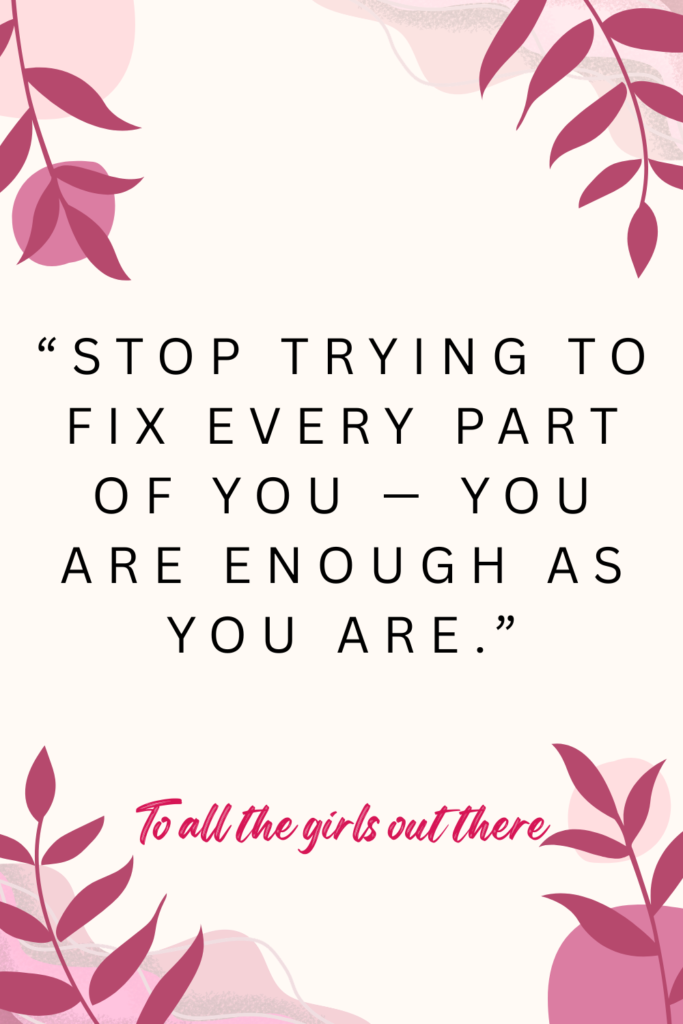
She said: celebrate yourself like you celebrate others. Big yourself up the way you big up your friends. Keep striving for a life that feels content — but stop trying to fix every part of you.
And I think that’s such a fitting way to end a conversation about how to change your life.
Letting Go of Perfectionism
Because somewhere along the way, we convinced ourselves that change means perfection. That we need to optimise every flaw. Heal everything immediately. Become this polished, put-together version of ourselves before we’re allowed to feel proud.
But what if changing your life as a young woman starts with acceptance instead?
Not complacency. Not settling. But acceptance.
Accepting that you are a work in progress. Accepting that you’ve survived things you didn’t deserve. Accepting that you’re still learning. And still worthy.
Turning Pain Into Purpose
Laiba also said something earlier in the episode that ties into this so beautifully — don’t let your bad experiences live in your head rent free. Let them become the reason you change the world. Charge them rent. Turn them into purpose. Turn them into empathy. Turn them into fuel.
At the end of the day, change can come. You deserve to see yourself at your best — healed, evolving, pursuing what’s meant for you, loving others and loving yourself properly. Living instead of just surviving. This life is a journey. None of us have it completely figured out. We’re all navigating it in real time. So you might as well navigate it in a way that feels aligned to you.
Start Small, Start Today
If this resonated, I’d really encourage you to listen to my Inner Work episode or read the blog version alongside this post. It breaks down what real internal change actually looks like — beyond routines and surface-level motivation. As well as joining my free private podcast where I have more intimate conversations about confidence, identity, healing and self-worth.
You might also want to revisit my first episode with Laiba “Healing from a Toxic Home & Finding Self-Worth With Laiba Waseem”, where she shares her full story in depth.
If you’ve been searching for how to change your life, maybe the first step isn’t massive.
Maybe it’s simply this:
Celebrate yourself. Stop trying to fix every part of you. Take one small step today.
And trust that you are capable of so much more than you think.