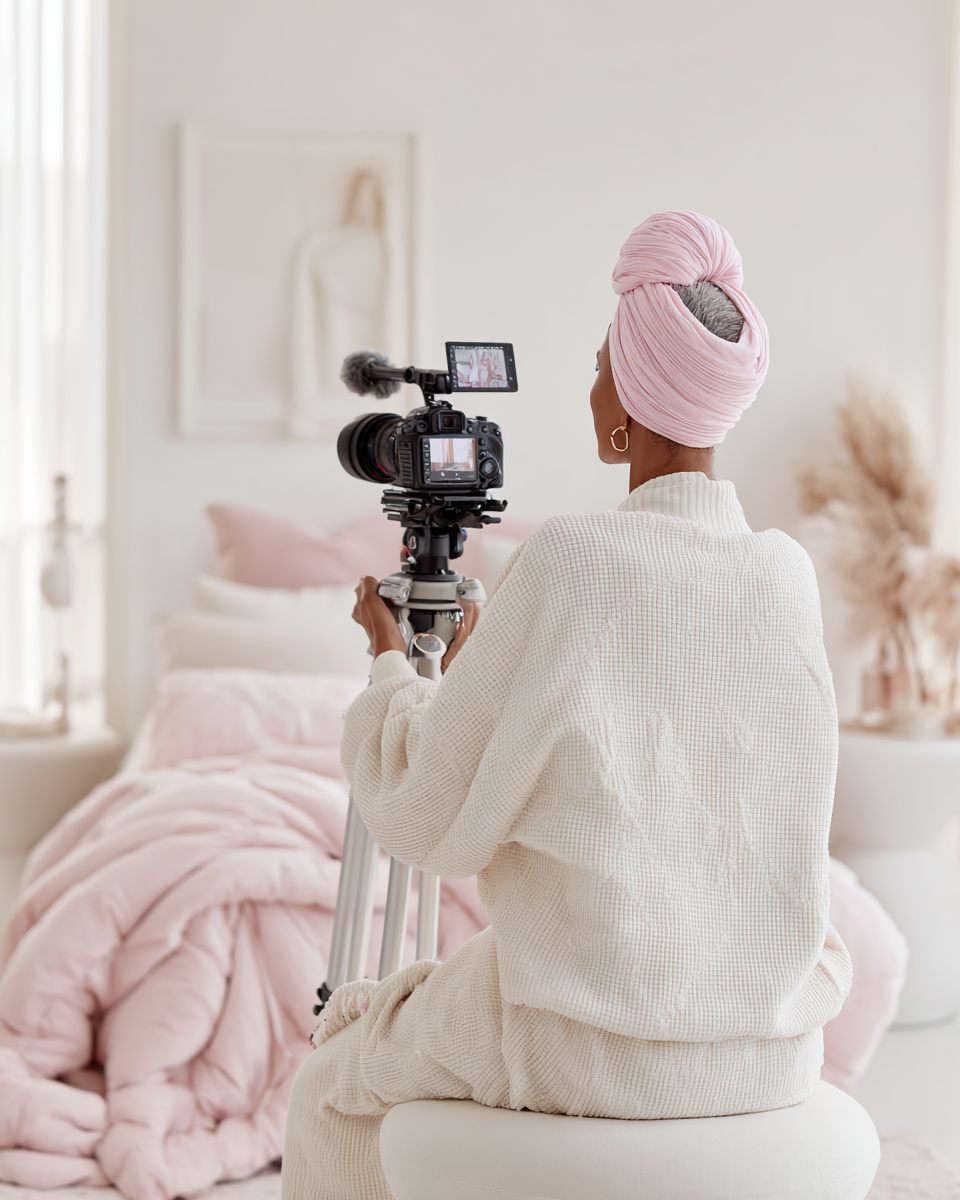
In a world where social media shapes so much of life, many people quietly live under the pressure to perform. It’s becoming harder to tell the difference between who we are and who we’re performing to be. From curated feeds to constant comparison, many of us end up building versions of ourselves that look good on the outside, but don’t always feel fully aligned on the inside.
In this conversation with Marisa, we spoke about identity, social media, and what it really means to come back to yourself when you’ve spent so long adapting to everything around you.
Growing Through Difficult Things Without Losing Yourself
Throughout the conversation, Marisa spoke very openly about her childhood. Violence, growing up with instability, fear and about her father’s mental illness.
One thing that became very clear very quickly is that Marisa’s upbringing was never just one thing.
It was structured and chaotic at the same time. Privilege in some ways, instability in others. Safety in certain places, emotional unpredictability in others.
And I think growing up like that changes how you move through the world. You either become completely overwhelmed by life, or you learn how to keep moving through it anyway.
Not in some “everything happens for a reason” way, but more because sometimes adapting is the only option you feel like you have.
One thing I really appreciated is that she never tried to romanticise any of it. She was very honest about the fact there were things she would absolutely change about her childhood if she could. Things nobody would willingly choose.
But at the same time, she also spoke about not wanting to stay emotionally trapped in regret forever.
We’ve also explored this more deeply in another conversation with Laiba, where she spoke about childhood trauma and how she worked through not letting it define her identity.
Making Peace Instead of Staying Stuck
At one point Marisa said she prefers to use the phrase “making peace” instead of “acceptance,”.
Because acceptance can sometimes sound like you’re supposed to approve of what happened to you.
Whereas making peace feels more like:
“This hurt me, but I don’t want it controlling my entire life anymore.”
We also spoke about therapy and why sometimes people genuinely need support processing difficult things.
Not because they’re weak or broken.
But because it’s hard to see certain situations clearly when you’re emotionally inside them.
And I liked that the conversation didn’t treat healing like this perfect linear journey where some people become “strong” and others don’t.
Because the reality is people respond to pain differently.
People don’t choose how they respond to pain. Nobody consciously decides, “this will ruin me” or “this will make me stronger.” Life just lands differently on different nervous systems, different environments, different support systems.
And honestly, I think that’s just part of being human.
The important thing is not staying stuck there forever alone.
Why Being Yourself Feels So Difficult Today
A big part of our conversation naturally came back to identity and what it actually means to be yourself in today’s world.
And one of the main things that I realised is that most people don’t struggle with not knowing who they are — they struggle with actually being it.
Because being yourself sounds simple when you say it like that, but in reality authenticity often means separating yourself from what’s familiar. From the group. From the “tribe” you’ve built comfort in.
And that’s not easy.
We spoke about how humans are wired to seek belonging. To find their people. Their group. Their sense of safety. And because of that, it makes sense that so many people naturally end up mirroring the people around them without even realising it.
Not because they’re fake, but because in a culture shaped by social media and comparison, fitting in often feels safer than standing out.
And over time, that can start to blur things. You start adjusting yourself slightly depending on who you’re around. You start second-guessing your own opinions or performing versions of yourself that feel more acceptable in different spaces.
And slowly, without even noticing, you can end up building an identity that’s more shaped by the people around you than by you.
Social Media and the Pressure to Perform
Another really big part of the conversation was social media and how much it has shaped the way people present themselves today.
Marisa was saying how people aren’t actually building identities anymore, but rather they’re building images usually, shaped around online validation and performance.
And honestly when she said that I instantly thought about social media because so much online now really does feel copy and paste sometimes.
The same outfits. The same poses. The same sounds. The same captions. The same opinions repackaged slightly differently depending on the algorithm.
And it’s not even always intentional. It’s just what gets rewarded. What gets seen. What gets liked.
But the effect of that is that individuality and authenticity can slowly start to feel diluted.
It can feel like everyone is slowly becoming a version of the same person, just slightly edited.
Don’t get it twisted though we love a cheeky trend, but not at the expense of losing your identity and values.
And we spoke about how that creates this weird pressure, especially for younger people, where even being “authentic” can start to feel like something you have to perform correctly.
Like there’s a right way to be yourself online. Some people aren’t even being themselves but just choosing to be different because that’s what they feel will do well.
But the problem is, once you start shaping yourself around what performs well online, you can slowly lose touch with what actually feels authentic to you offline.
And then you end up in this space where your identity isn’t really coming from within anymore — it’s coming from what gets attention.
Validation, Influencers & Performing Online
We also spoke about influencer culture, in terms of what it does to people’s sense of validation and identity.
Because Marisa made a really important point about how modern identity and self-worth have become heavily tied to external approval, especially online.
Likes. Views. Comments. Brand deals. Reactions. Attention.
And when your sense of self starts to get reinforced by those things, it’s really easy to lose sight of who you are without them.
And because of that some people unintentionally become “products” of their own image online. The focus moves away from who they actually are and toward how others perceive, market, or receive them.
And while that can work for some people, the issue is when it becomes the only version of identity someone has.
Because if your sense of self is built entirely around external validation, what happens when that validation slows down, changes, or disappears?
When Identity Becomes a Performance
She spoke about how, in many cases, people no longer present themselves authentically — instead, they perform versions of themselves that get rewarded.
And over time, that can shift from something casual into something more foundational, where your identity starts to depend on how other people respond to you.
There was also a really important point about how a lot of people today genuinely want to become influencers or live very curated, visible lives — and that’s not automatically a bad thing.
But the question becomes whether there’s actually something underneath it, or whether it’s just about being seen.
Because if it becomes purely about visibility without direction or substance, it starts to feel empty quite quickly.
And I think that connects back to something she kept coming back to throughout the episode — the difference between having a platform… and letting your platform define you.
One is intentional. The other slowly starts to own you.
Social Media Comparison and the Illusion of “Normal Life”
We also spoke about social media culture and how much it has shaped what people now think “normal life” is supposed to look like.
There’s pressure, even for people who aren’t influencers, to constantly present themselves in a certain way. To look interesting. Successful. Confident. “Put together.” Like life is always happening in a highlight reel.
And maintaining that constantly is exhausting.
Because it stops being about expression, and starts becoming performance.
The Reality Behind Curated Online Lives
Marisa also spoke about how, in some cases, people aren’t really building an identity anymore — they’re building something that performs well.
Because when you’re constantly exposed to people online who seem polished, curated, and always “on,” it becomes really easy to start comparing your own life to something that isn’t actually real in full.
And that’s where social media comparison starts to creep in.
And it happens in small thoughts. Feeling like you’re not doing enough. Not achieving enough. Not living enough. Even when your actual life is completely fine as it is.
Because I was saying that social media isn’t always fake in the sense that people are posting real things they experienced.
They did go on the holiday.
They did go to the restaurant.
They did have that nice day.
But people are posting highlights, moments, and edits stitched together into something that looks permanent.
I honestly think comparison has become one of the biggest struggles for our generation.
Because when everything starts to look similar online — the same aesthetics, the same routines, the same way of living life — it becomes harder to remember that you’re allowed to look different too.
And even if logically you know people are curating what they post… emotionally it still affects you.
And I think after a while people stop chasing things they genuinely want, instead shaping their identity around what performs well rather than what actually feels natural to them.
So instead of asking “does this feel like me?” it slowly becomes “will this get liked?”
Boundaries, Self-Respect & Standing by Your Word
One of the strongest parts of this conversation was about boundaries.
Marisa was very clear on this: boundaries only work if you actually live by them. Not just say them. Not just think them. But follow through on them, even when it’s uncomfortable.
Because the moment you start bending your own line “just this once,” it becomes easier for other people to keep crossing it. And over time, you end up teaching people how to treat you.
And she kept bringing it back to something really simple:
No is not a dirty word.
It’s actually one of the clearest forms of self-respect.
But the important part isn’t just saying no — it’s being willing to stand by it. Even if that means walking away from friendships, relationships, or situations that don’t align with your values.
There was also a wider point here about equality and self-respect. The idea that you can’t really claim your boundaries if you’re not willing to back them up with action.
Because boundaries without action don’t really stick
But underneath it all, the message stayed consistent: it’s about integrity. About doing what you say you’re going to do. About not making empty statements, but living in a way that aligns with what you actually stand for.
Even when that’s difficult.
Even when it would be easier not to.
Identity, Authenticity & Living Through Your Own Lens
One of the strongest things Marisa said in this episode was:
“It’s only your journey, not anybody else’s. Live your life through your own lens, not what somebody else thinks you should be.”
A lot of what we spoke about — people pleasing, performance, social media, identity — eventually comes back to this idea of living in a way that feels aligned with you, not the version of you that other people expect.
And if I am being 100% honest I do think that a lot of girls do quietly feel exhausted by the pressure to constantly perform a version of themselves online and offline.
Performing confidence, success, happiness, or just “having it all together.”
When the reality is, most people are still figuring it out as they go.
Marisa even described herself as still being “cookie dough,” which was a fun way of putting it — because it takes the pressure off this idea that you’re supposed to be fully formed at a certain point in life.
Identity isn’t something you arrive at. It’s something you keep shaping.
Becoming Your Authentic Self Doesn’t Have to Be Extreme
I asked Marisa for the steps that you can take to become more authentic especially if you’ve spent a long time performing or pleasing people. And she said
It starts with the small things.
Changing one small thing about how you present yourself.
Wearing something because you actually like it, not because it fits an expectation.
Saying no to one thing you would normally say yes to.
Creating a bit of space where you choose differently, even in a small way.
You don’t need to completely reinvent yourself overnight. You rebuild it through repetition.
And through proving to yourself, in small moments, that it’s safe to be yourself.
Coming Back to Yourself
I think we can all agree that the main takeaway from this conversation was that many of us live under the pressure to perform in our day-to-day lives.
And we shouldn’t, because our authenticity and individuality are beautiful parts of being human. It makes you one of a kind and is what makes life feel whimsical. It shouldn’t be something we shy away from. No matter how hard it may be, it should be something we at least strive towards.
Like Marisa said:
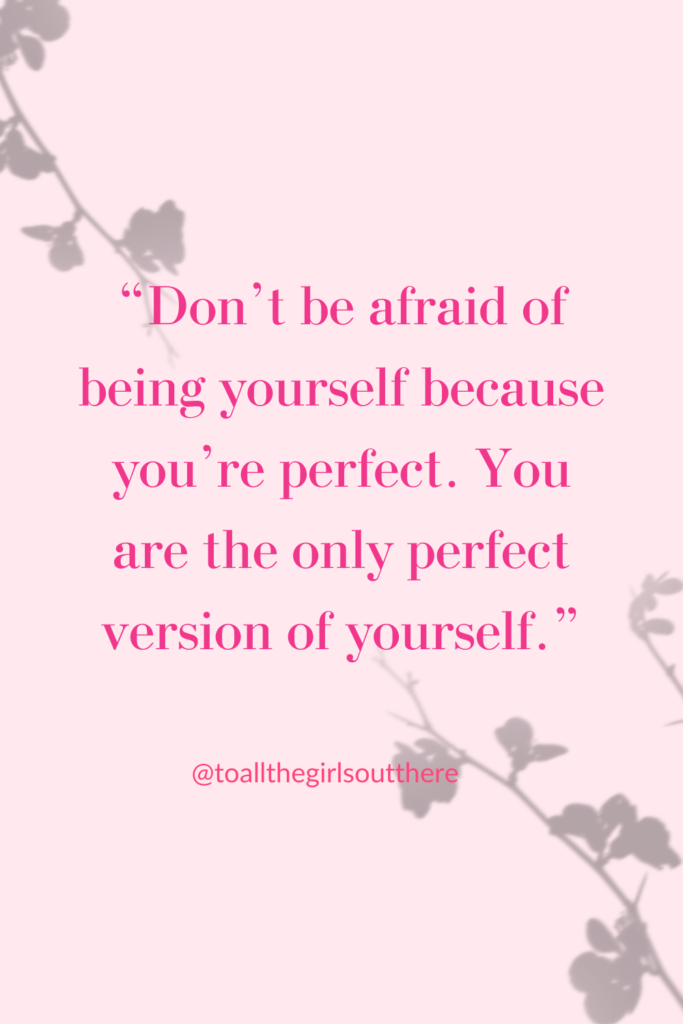
“Don’t be afraid of being yourself because you’re perfect. You are the only perfect version of yourself.”
You might get it wrong sometimes, or slip back into old patterns — and that’s part of it too.
But you don’t have to rush the process or get it right all at once. You’re allowed to grow slowly and figure things out in real time.
Not becoming a fixed version of yourself, but staying open to becoming.
And learning, bit by bit, how to come back to yourself in the process.
If this resonates
Don’t forget the full conversation with Marisa is attached to this post, where we go even deeper into identity, authenticity, and the way social media shapes how we see ourselves.
If any of this connects with where you’re at right now, there are a couple of other conversations that explore similar ideas.
How to Change Your Life as a Young Woman (with Laiba)
A conversation about childhood trauma and how it can shape your story without having to define it.
Eldest Daughter Syndrome: Carrying Responsibility
A deeper look at boundaries, responsibility, and the patterns that can make it hard to prioritise yourself.
For some people, conversations like this can also bring up things they might want support with, if this is you, organisations like the British Association for Counselling and Psychotherapy (BACP) can be a helpful place to start exploring therapy options if needed.